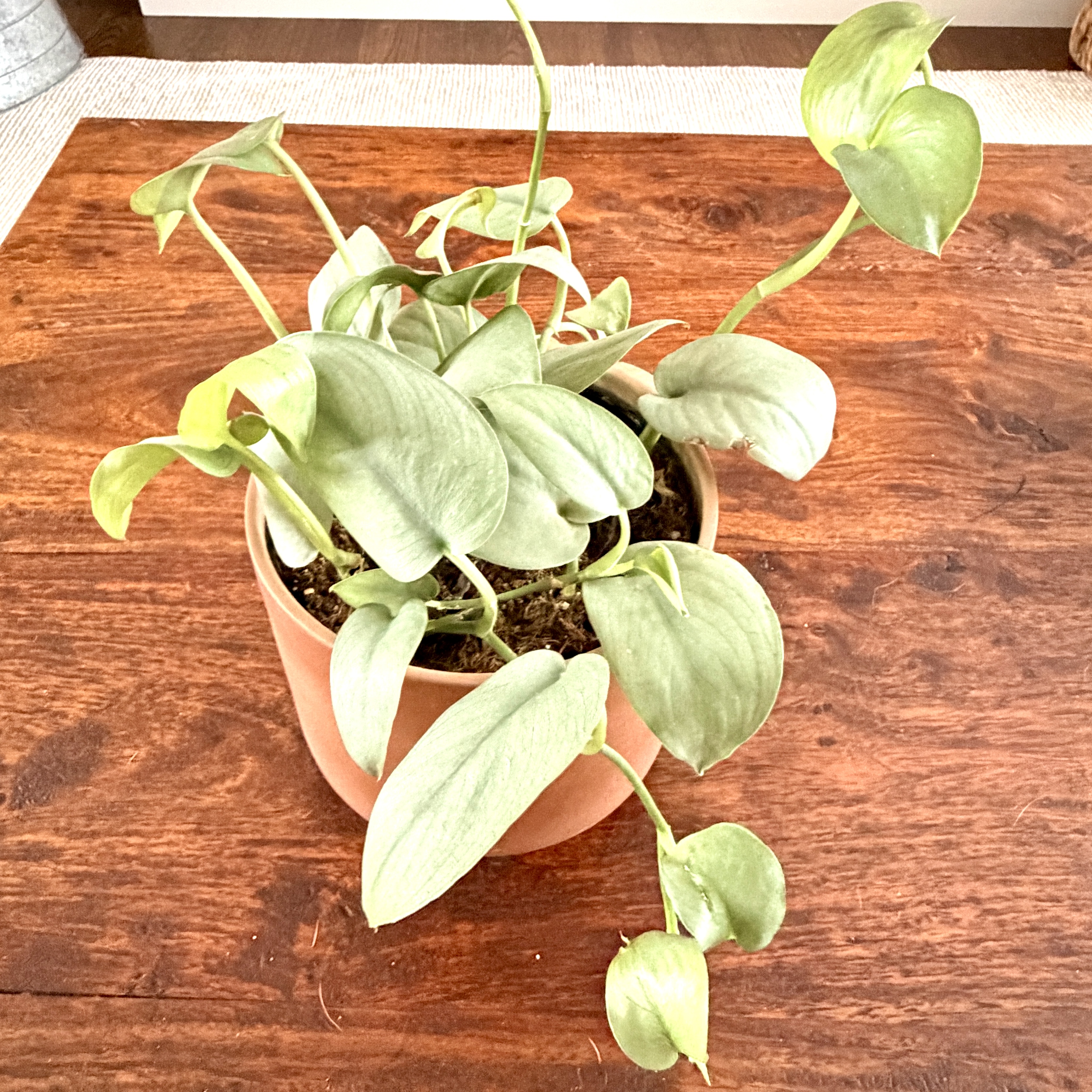
Moonlight Scindapsus, Sterling Silver Scindapsus
availableScindapsus treubii 'Moonlight'
Scindapsus treubii 'Moonlight' is a beautiful and relatively rare aroid known for its striking, almost entirely silvery-green leaves. Unlike its more common relative, Scindapsus pictus, 'Moonlight' features leaves that are uniformly silvery with a subtle sheen, rather than having distinct silver variegation. The leaves are typically lance-shaped to oval and have a smooth, somewhat thick texture. It is a vining plant that can trail gracefully or be trained to climb.
Light
Bright indirect light is ideal. It can tolerate medium indirect light, but growth may slow, and the silvery sheen might be less pronounced. Avoid direct sunlight, which can scorch the leaves.
Water
Water thoroughly when the top 1-2 inches of soil are dry. Allow the soil to dry out partially between waterings to prevent root rot. It's better to underwater slightly than to overwater. Reduce watering frequency in winter.
Soil
A well-draining, airy potting mix is essential. A good mix would be a standard houseplant potting soil amended with perlite, orchid bark, or coco coir to improve drainage and aeration.
Fertilizer
Feed with a balanced liquid fertilizer diluted to half strength every 2-4 weeks during the active growing season (spring and summer). Do not fertilize in fall and winter when the plant's growth slows.
Temperature & Humidity
Prefers average to warm temperatures between 65-80°F (18-27°C). It thrives in high humidity (60% or higher) but can tolerate average household humidity (40-50%). To increase humidity, use a pebble tray, humidifier, or group with other plants.
Propagation
Easily propagated by stem cuttings. Take cuttings with at least 1-2 nodes and a few leaves. Place them in water or a moist, well-draining potting mix. Roots typically develop within a few weeks.
Growth & Size
This is a vining plant that can trail or climb. In ideal indoor conditions, vines can reach several feet in length (3-6 feet or more). The mature leaf size can be 4-6 inches long.
Hardiness Zone
USDA Zone 10-12 (as an outdoor plant; typically grown indoors)
Toxicity
Toxic to pets and humans if ingested due to calcium oxalate crystals, which can cause oral irritation, burning, swelling, and difficulty swallowing. Keep out of reach of children and pets.