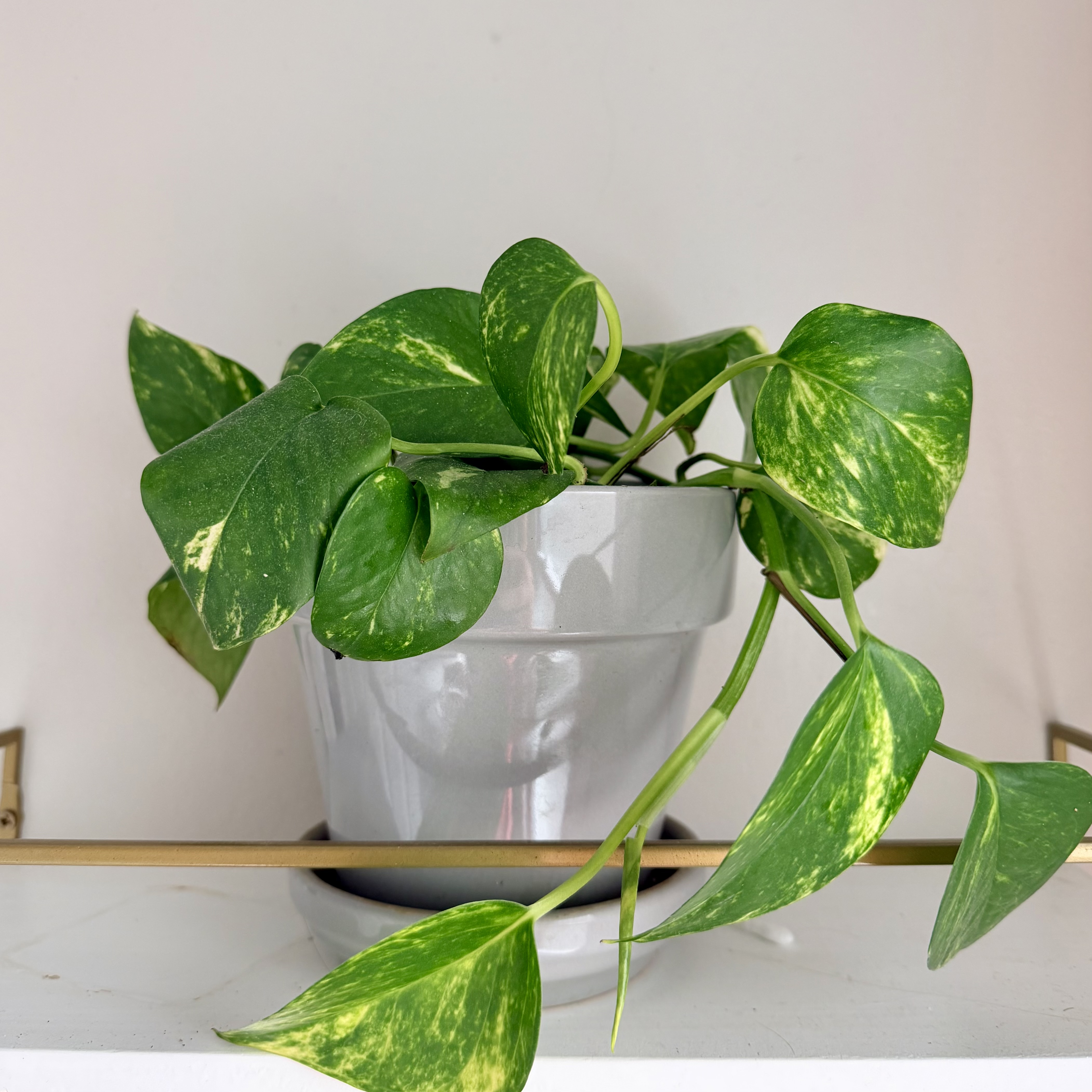
Golden Pothos, Devil's Ivy
availableEpipremnum aureum
Golden Pothos is a popular, easy-to-care-for houseplant known for its heart-shaped, glossy leaves with distinctive yellow or gold variegation. It is a vining plant that can trail gracefully from hanging baskets or climb with support. It's resilient and can tolerate a range of conditions, making it an excellent choice for beginners.
Light
Bright, indirect light is ideal for maintaining its vibrant variegation. It can tolerate low light conditions, but the variegation may fade, and growth will be slower. Avoid direct sunlight, which can scorch the leaves.
Water
Water thoroughly when the top 1-2 inches of soil feel dry to the touch. Allow the soil to dry out slightly between waterings to prevent root rot. Reduce watering frequency in winter.
Soil
A well-draining potting mix is essential. A standard indoor potting mix amended with perlite or orchid bark for improved drainage works well.
Fertilizer
Feed with a balanced liquid houseplant fertilizer once a month during the growing season (spring and summer). Reduce or stop fertilizing during fall and winter.
Temperature & Humidity
Prefers average room temperatures between 65-85°F (18-29°C). It tolerates average household humidity but thrives in higher humidity (40-60%), which can be achieved with misting, a pebble tray, or a humidifier.
Propagation
Easily propagated from stem cuttings. Cut a stem with at least 2-3 leaves and a node. Place the cutting in water or moist potting mix. Roots typically form within a few weeks.
Growth & Size
A vining plant that can trail several feet long (up to 10-20 feet indoors, much longer outdoors in tropical climates). Its growth habit makes it suitable for hanging baskets or climbing up a moss pole.
Hardiness Zone
USDA Zone 10-12 (as an outdoor plant; typically grown as an indoor plant in most climates)
Toxicity
Toxic to humans and pets (cats and dogs) if ingested due to the presence of calcium oxalates, which can cause oral irritation, pain, swelling, and difficulty swallowing.