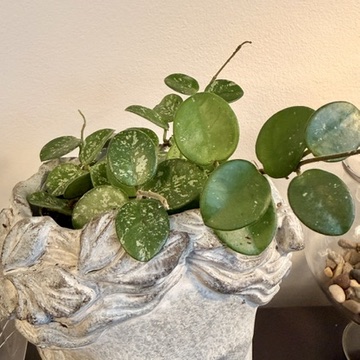
Fuzzy Leaf Hoya, Wax Leaf Hoya, Miniature Hoya
availableHoya curtisii
Hoya curtisii is a charming, small-leaved Hoya species known for its delicate, fuzzy, heart-shaped to rounded leaves that are often mottled or speckled with silver variegation. It's a vining epiphyte that naturally grows on trees in tropical environments. The leaves are relatively thick and succulent-like, helping it store water. When mature, it can produce small, star-shaped, fragrant flowers, typically pale yellow-green with a reddish-brown center.
Light
Bright indirect light is ideal. It can tolerate medium light but may grow slower and produce fewer flowers. Avoid direct, harsh sunlight, which can scorch the leaves, especially the variegated parts. An east-facing window or a few feet back from a south or west-facing window is usually suitable.
Water
Water thoroughly when the top 1-2 inches of soil feel dry to the touch. Allow the soil to dry out almost completely between waterings, as Hoyas are susceptible to root rot if kept too wet. Reduce watering significantly during the cooler, dormant months. The succulent-like leaves indicate it can tolerate some drought.
Soil
A well-draining, airy potting mix is crucial. A good mix would be an orchid bark mix, or a standard potting mix amended with perlite, orchid bark, and/or coco coir to improve drainage and aeration. It prefers slightly acidic to neutral soil (pH 6.0-7.0).
Fertilizer
Fertilize sparingly during the growing season (spring and summer) with a balanced liquid fertilizer diluted to half strength, about once every 2-4 weeks. Reduce or cease fertilization during fall and winter when growth slows. A fertilizer higher in phosphorus can encourage blooming once the plant is mature.
Temperature & Humidity
Prefers warm temperatures between 65-80°F (18-27°C). Avoid temperatures below 50°F (10°C). Hoya curtisii thrives in high humidity (60-80%), typical of its native tropical habitat. While it can tolerate average household humidity, higher humidity encourages lusher growth and can help prevent leaf crisping. Consider using a pebble tray, humidifier, or grouping with other plants.
Propagation
Easily propagated by stem cuttings. Take a cutting with at least 2-3 nodes and a few leaves. Remove the bottom leaves and place the cutting in water, moist sphagnum moss, or a well-draining potting mix. Roots typically form within a few weeks. High humidity can aid in successful rooting.
Growth & Size
This is a trailing or climbing vine. In ideal conditions, its vines can grow several feet long (e.g., 3-6 feet or more indoors). The leaves are small, typically 0.5-1 inch (1-2.5 cm) in diameter. It has a relatively slow to moderate growth rate.
Hardiness Zone
USDA Zone 10-12 (USDA)
Toxicity
Generally considered non-toxic to humans and pets (cats and dogs) if ingested, though large quantities of any plant material can cause mild stomach upset. The sap may cause mild skin irritation in sensitive individuals.