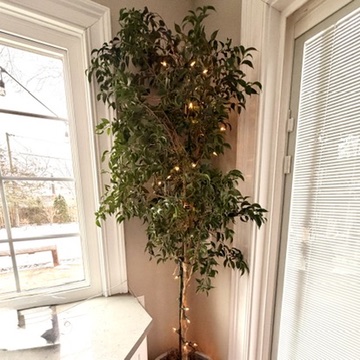
Ficus Tree
availableFicus benjamina
Indoor Ficus Tree
Light
Bright indirect light is ideal. It can tolerate some direct morning sun but avoid harsh afternoon sun which can scorch leaves. It can adapt to lower light conditions but may become leggy and drop leaves. Rotate the plant periodically for even growth.
Water
Water thoroughly when the top 1-2 inches of soil feel dry to the touch. Ensure good drainage and do not let the plant sit in standing water, as this can lead to root rot. Reduce watering frequency in winter when growth slows down. Wilting leaves can indicate both overwatering and underwatering, so check soil moisture carefully.
Soil
A well-draining, peat-based potting mix is suitable. A mix formulated for houseplants or tropical plants, often containing peat moss, perlite, and pine bark, works well. Good aeration is important to prevent root rot.
Fertilizer
Feed with a balanced liquid fertilizer (e.g., 20-20-20) diluted to half strength every 2-4 weeks during the active growing season (spring and summer). Do not fertilize during fall and winter when the plant is dormant or growth is slow.
Temperature & Humidity
Prefers temperatures between 65-80°F (18-27°C). Avoid sudden temperature fluctuations and cold drafts, which can cause leaf drop. Ficus benjamina thrives in high humidity (above 50%). Mist the leaves regularly, use a pebble tray with water, or place a humidifier nearby, especially in dry indoor environments.
Propagation
Can be propagated by stem cuttings. Take 4-6 inch cuttings with several leaves, remove the lower leaves, and dip the cut end in rooting hormone. Plant in a moist, well-draining potting mix or place in water. Provide high humidity and warmth. Air layering is also a successful method for larger stems.
Growth & Size
As an indoor houseplant, it typically grows upright, reaching heights of 6-10 feet (1.8-3 meters) or more, depending on pot size and pruning. It has a tree-like growth habit with a central trunk and branching canopy. In its natural outdoor environment, it can grow much larger, up to 100 feet (30 meters).
Hardiness Zone
USDA Zone 10-12 (for outdoor cultivation; typically grown indoors in all zones)
Toxicity
Toxic to cats, dogs, and humans if ingested. The sap can cause skin irritation or dermatitis in sensitive individuals. Ingestion can lead to oral irritation, vomiting, and diarrhea.