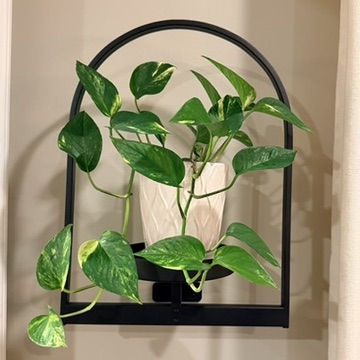
Pothos, Devil's Ivy
availableEpipremnum aureum
Pothos is a popular, easy-to-care-for trailing vine known for its heart-shaped, glossy leaves. The variety shown, likely 'Golden Pothos' or 'Marble Queen', features green leaves variegated with splashes of yellow or creamy white. It's an excellent choice for hanging baskets or shelves where its vines can cascade downwards, or it can be trained to climb.
Light
Bright, indirect light is ideal for optimal growth and variegation. It tolerates low light conditions, but the variegation may become less pronounced, and growth will slow. Avoid direct, intense sunlight, which can scorch the leaves.
Water
Water thoroughly when the top 1-2 inches of soil feel dry to the touch. Allow the soil to dry out partially between waterings to prevent root rot. Overwatering is a common issue. Reduce watering frequency in winter months.
Soil
A well-draining potting mix is essential. A standard indoor potting mix amended with perlite or orchid bark for improved drainage works well. Avoid heavy soils that retain too much moisture.
Fertilizer
Feed with a balanced liquid houseplant fertilizer diluted to half strength every 2-4 weeks during the active growing season (spring and summer). Reduce or cease fertilization during fall and winter when growth slows.
Temperature & Humidity
Thrives in average room temperatures between 65-80°F (18-27°C). Avoid temperatures below 50°F (10°C). It appreciates moderate to high humidity (40-60%), but tolerates average household humidity. Misting occasionally or placing it near a humidifier can be beneficial, especially in dry environments.
Propagation
Easily propagated by stem cuttings. Take cuttings with at least 2-3 leaves and a node. Place cuttings in water or directly into moist potting mix. Roots typically form within a few weeks.
Growth & Size
A vining plant that can trail or climb. In indoor conditions, vines can reach lengths of 6-10 feet or more, but can be pruned to maintain desired size and shape. Leaves typically grow to 4-8 inches long.
Hardiness Zone
USDA Zone 10-12 (typically grown as an indoor houseplant)
Toxicity
Toxic to pets (cats, dogs) and humans if ingested, due to calcium oxalate crystals. Ingestion can cause oral irritation, pain, swelling of the mouth, tongue, and lips, drooling, vomiting, and difficulty swallowing. Keep out of reach of children and pets.